

William Witte and the Making of Modern Queens
FOUNDING VOICES
William Witte
Story and family photographs contributed by Jim Witte
Edited by the Immigrant Hall of Honor Editorial Team.

| Born | June 19, 1868 in Uchte, Prussia/Germany |
|---|---|
| Arrived in the U.S. | 1884 — arrived in New York City aboard the Donau from Bremen, Germany |
| Settled in | Middle Village, Queens, New York |
| Occupation(s) | Farmer, gardener, butcher, businessman, bank founder |
| Died | July 1943 — Southampton, Long Island, New York |
William Witte, great-grandfather of Immigrant Hall of Honor board member Jim Witte, was a farmer, father and businessman who immigrated to the United States from Germany as a teenager in 1884.
Witte was part of a late 19th-century wave of German emigration that brought roughly 4.5 million Germans to the United States between 1840 and 1893. Many came from rural agricultural communities in northern Germany, including Uchte, where William was born in 1868.
During this period, northern Germany faced widespread economic hardship and land shortages, with many farming families struggling to survive on increasingly fragmented plots of land. By the mid-19th century, historians estimate that roughly three-quarters of German farmers lacked enough land to live comfortably.
America represented something radically different: land, opportunity and the chance to define one’s own future. Whether his departure was driven by wanderlust, economic necessity or both, William left behind a small-town agricultural community for the rapidly growing industrial power of the United States.
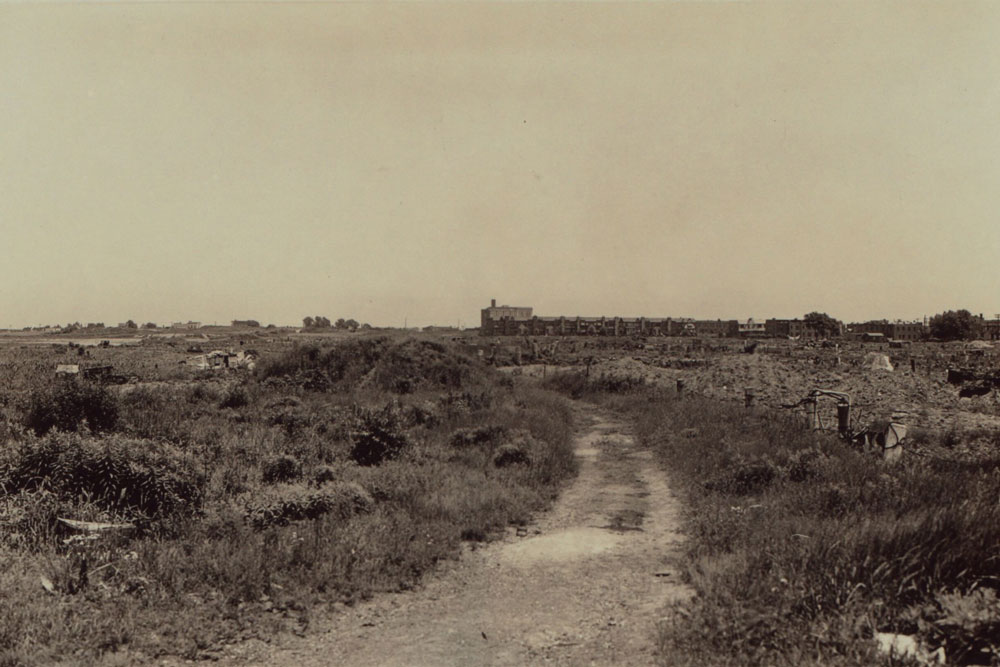
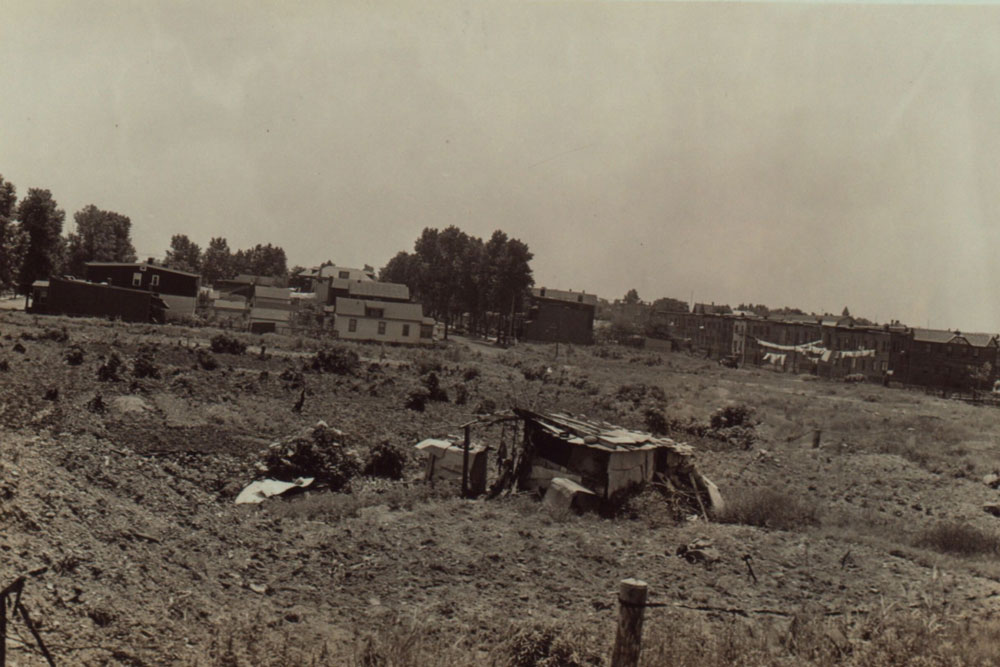
Queens: 63rd Avenue – 71st Street. Irma and Paul Milstein Division of United States History, Local History and Genealogy, The New York Public Library. “Queens: 63rd Avenue – 71st Street” The New York Public Library Digital Collections. 1935. https://digitalcollections.nypl.org/items/79b06030-c556-012f-4039-58d385a7bc34
New York City’s urban sprawl hadn’t yet fully reached Queens’ Middle Village when Witte settled there in the early 20th century.
He entered a community heavily populated by German immigrants, many of whom were drawn to Queens by affordable land, expanding transportation routes and established German churches and social networks.
At the time, the area retained a distinctly semi-rural character, shaped by truck farms, dairies, cemeteries and small-scale agriculture.
William Witte built a life rooted in the agricultural economy of Queens, raising his family with his wife, Lisette, on Juniper Swamp Road. Historical records describe him at various times as a farmer, gardener, vegetable grower, and later a butcher, reflecting the fluid working lives common among immigrant families in the area’s semi-rural neighborhoods.
But the landscape around Witte was rapidly changing.
The farm he ran on Juniper Valley Road was eventually sold for a housing development, mirroring the rapid urbanization reshaping Middle Village in the early 20th century.


In 1920, Witte joined other local business leaders in founding Ridgewood Savings Bank, an institution created to serve a rapidly expanding Queens as farmland gave way to suburban neighborhoods.
Founded just nine years before the 1929 stock market crash, the bank endured the Great Depression and remains in operation today, with dozens of branches and hundreds of employees across the New York metropolitan area.

By the time of Witte’s death in 1943, the institution he helped establish was encouraging Americans to purchase World War II savings bonds to support the war effort against Germany, the country he had left nearly six decades earlier.
William Witte’s life traced the arc of modern Atlantic history.
Jim Witte
Born into rural Prussia during the final years of the fragmented German states, he emigrated as part of one of the nineteenth century’s largest population movements.
In Queens, he participated in the transformation of farmland into suburbia, of an immigrant enclave into a stable American community.
As a farmer, meat tradesman, bank founder, fraternal member and family patriarch, he embodied the upward mobility available—though never guaranteed—to European immigrants in industrial America.
He survived World War I, the 1918 flu pandemic, the Roaring 20’s, and the Great Depression and died during World War II.
Inspired by this Story?
Discover more inspiring immigrant stories and learn how immigrants have shaped American history. Subscribe to the Immigrant Hall of Honor’s monthly e-newsletter.
Monthly stories and updates from the Immigrant Hall of Honor. Unsubscribe at any time.