
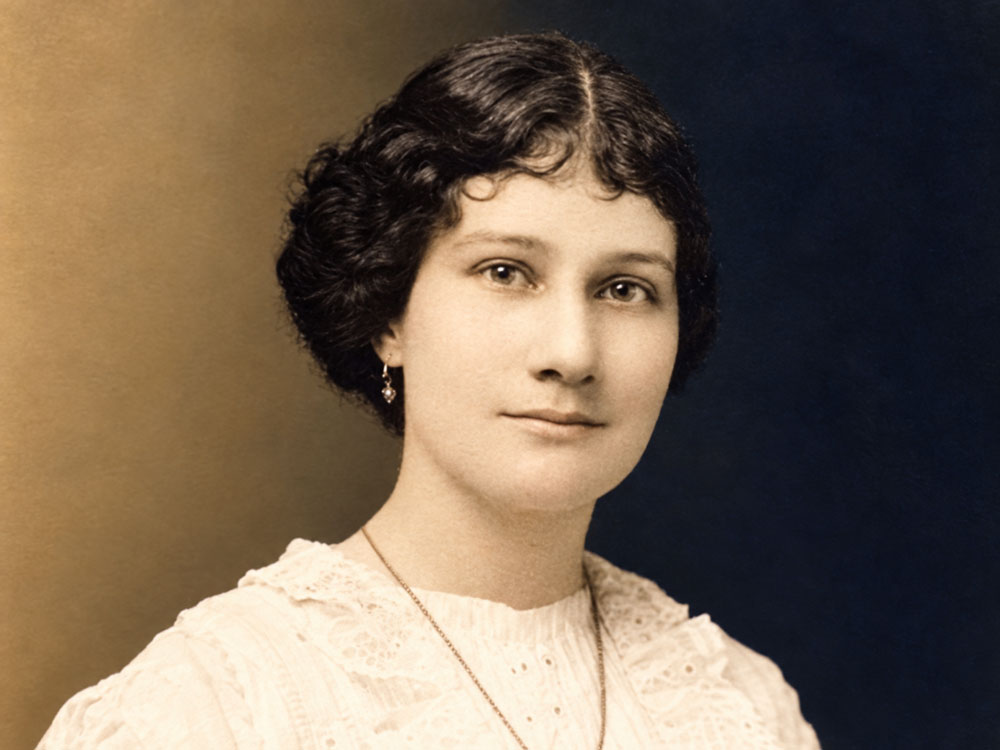
Across the Rio Grande—The Education of Rafaela Prieto Ochoa
FOUNDING VOICES
Rafaela Prieto Ochoa
Story and family photographs contributed by Philip Ochoa
Edited by the Immigrant Hall of Honor Editorial Team.
The Immigrant Hall of Honor gratefully acknowledges the Nettie Lee Benson Latin American Collection (University of Texas Libraries, The University of Texas at Austin), for preserving and providing access to the Alejandro Prieto Papers, an invaluable resource in the research for this story.
|
Born |
October 30, 1887 in Veracruz, Mexico |
|---|---|
|
Arrived in the U.S. |
Laredo, Texas in 1904 to attend school at the Laredo Seminary |
|
Settled in |
Laredo, Texas |
|
Occupation(s) |
Homemaker |
|
Died |
January 9, 1967 — Laredo, Texas |
When Rafaela Prieto Núñez crossed the Rio Grande to attend school in Laredo, Texas, she was only 16 years old. She did not arrive by chance. She came because an uncle believed that education could change the course of a young woman’s life—and because she was determined to prove him right.
Born in Veracruz, Mexico, on October 30, 1887, Rafaela was the daughter of Ramón Rodolfo Prieto Quintero and Micaela Núñez Carrasco. Rafaela’s childhood was marked by both opportunity and tragedy. Her father died in Tampico when she was just seven years old, leaving her mother to raise the family. After her father’s death in 1895, her uncle, Alejandro Prieto Quintero (1841–1921)—an engineer, former governor of Tamaulipas, and one of Mexico’s most respected public servants—assumed an active role in supporting the family.
Correspondence preserved in the Alejandro Prieto Papers (housed in the Nettie Lee Benson Latin American Collection, University of Texas Libraries, The University of Texas at Austin) documents his financial support for Rafaela’s widowed mother and reveals his extraordinary commitment to his niece’s future.
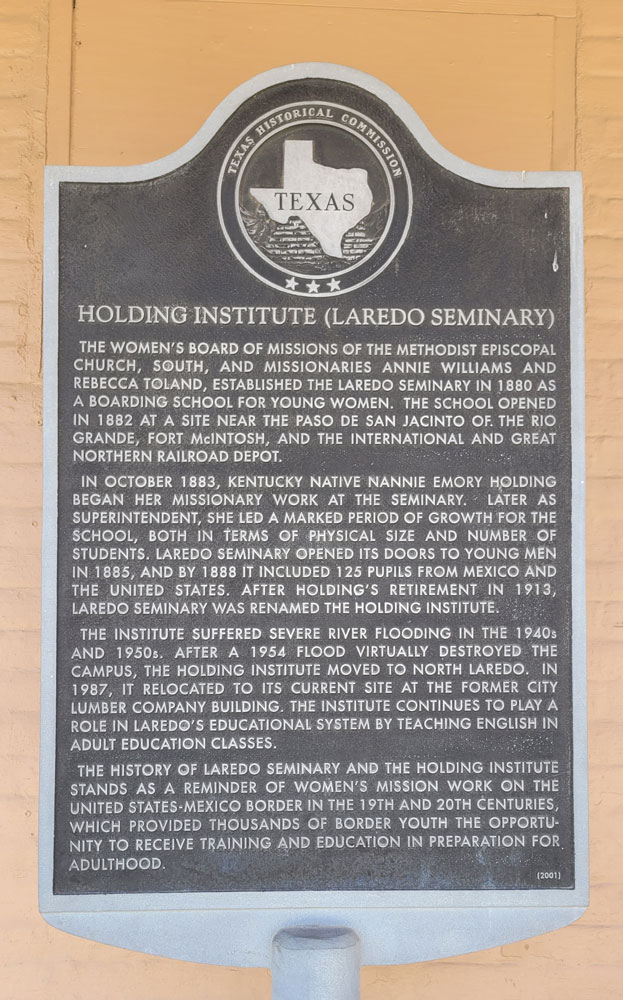
At a time when relatively few Mexican women pursued advanced education—and even fewer studied outside their homeland—he arranged for Rafaela to attend Laredo Seminary (later renamed the Holding Institute) in Laredo, Texas.
Photo by James Hulse, HMdb.org
Alejandro believed education should do more than cultivate refinement. He wanted Rafaela to be fluent in both Spanish and English, while mastering shorthand, typing, and practical business skills that would allow her to earn an independent living.
My aim in doing this for you is that, in two or three years, you will leave the school as a capable office worker.
Alejandro Prieto Quintero, March 4, 1904
Writing to his son, Alejandro explained that although her education would cost him 31 pesos every month, it might one day become “the salvation” of his late brother Rodolfo’s family.
Rafaela rewarded that confidence with remarkable resolve. At seventeen, her letters from Laredo Seminary show a young woman intent on making the most of an opportunity few Mexican girls of her generation received. She sought Alejandro’s advice about balancing her coursework, worried about disappointing him, and made clear that she hoped to complete the commercial course so she could one day support herself.
Writing to Alejandro, the school’s principal, Mrs. Holding, reported:
Having received your telephone message, I am pleased to report to you the excellent progress Rafaela has made to date. Her teachers say she is a child of remarkable ability, for in two weeks she has learned as much as most learn in a month. We are very pleased with her not only for her aptitude, but also for her good conduct, and we hope she will continue with us.
The praise captured qualities that emerge consistently throughout the correspondence. Rafaela with intelligent, disciplined, humble and purposeful. She understood that her education represented both an opportunity and a responsibility.
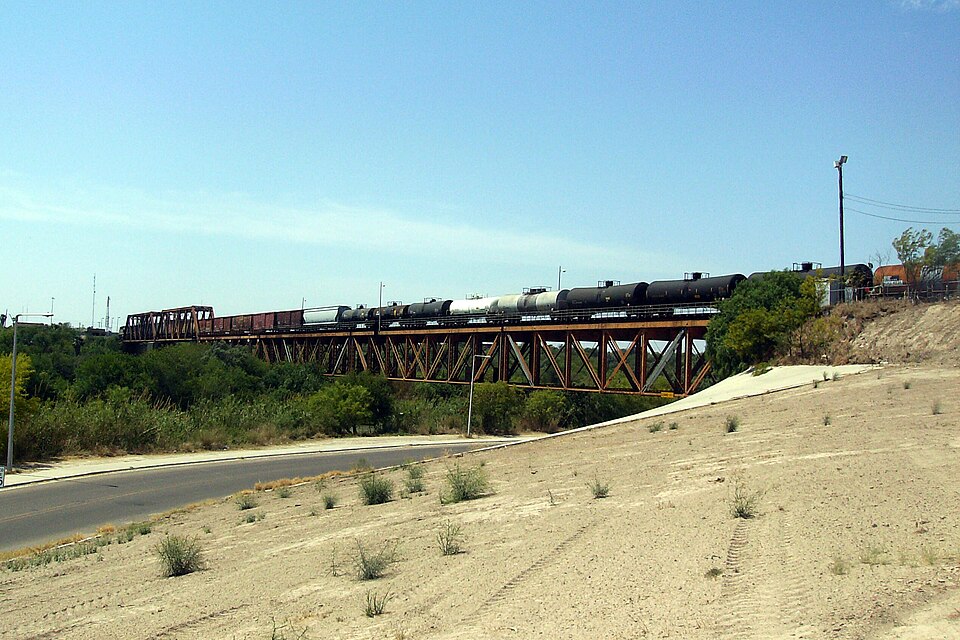
While living in Laredo, Rafaela met Luis Felipe Ochoa, a clerk with the Texas-Mexican Railway who later became the railroad’s head cashier. They married on December 7, 1914, and built a life together in the border city.
Rafaela and Luis Felipe had ten children, but two didn’t survive infacy. Together, they raised eight boys. As their sons came of age, the family answered their nation’s call to service. During World War II, six of the Ochoas’ sons served in the United States Armed Forces. In 1943, the City of Laredo honored Rafaela as the mother of multiple servicemen, recognizing her family’s extraordinary contribution to the war effort.
Rafaela remained in Laredo for the rest of her life, witnessing dramatic changes along the U.S.-Mexico border. When she was born in 1887, crossing the Rio Grande was relatively routine. People, goods, and families moved back and forth with comparatively little federal oversight, and she likely came to Laredo before passports and visas were required for routine crossings. During her lifetime, the establishment of the United States Border Patrol in 1924, new immigration laws, and the upheavals of the Mexican Revolution, the Great Depression, World War II, and the Bracero Program transformed the border into something much closer to what we recognize today. Rafaela lived through that entire evolution.
Her life illustrates a quieter but no less important immigrant story. She was not remembered for holding public office or seeking public recognition, but for embracing an educational opportunity, building a family, and opening the door for generations of service, leadership and achievement.
Her son Arthur Ernest Ochoa became a Texas state champion athlete, served in the U.S. Army, and later founded The Ochoa Company, one of Laredo’s leading air-conditioning businesses.
Arthur’s success reflected the opportunities his parents had worked to create. Today, his son, Immigrant Hall of Honor Board President Philip Ochoa, carries that legacy forward as a nonprofit leader dedicated to preserving the stories of immigrant families.
More than a century after Alejandro first imagined what his teenage niece might become, the confidence he placed in her continues to resonate in the accomplishments of her descendants.
Inspired by this Story?
Discover more inspiring immigrant stories and learn how immigrants have shaped American history. Subscribe to the Immigrant Hall of Honor’s monthly e-newsletter.
Monthly stories and updates from the Immigrant Hall of Honor. Unsubscribe at any time.