
Oscar Johanson Builds a Life in Sweden’s Second City
FOUNDING VOICES
Jennifer Ring
Story and family photographs contributed by Jennifer Ring, Joan Hackett, Janice Gibbons and Jeff Ring.
Edited by the Immigrant Hall of Honor Editorial Team.

| Born | February 2, 1890 in Moheda, Sweden |
|---|---|
| Arrived in the U.S. | September 5, 1908 — arrived in New York City aboard the RMS Lucania |
| Settled in | Chicago, Illinois |
| Occupation(s) | Druggist, drug salesman |
| Died | September 28, 1966 — Cook County, Illinois |
Oscar Hjalmar Johanson thought he’d left economic hardship behind when he boarded the RMS Lucania for America at age 18. In Chicago, the young Swedish immigrant reinvented himself, earning a pharmacy degree from Northwestern University, building a career as a neighborhood druggist, getting married and raising a family. Then came the Great Depression. The home he’d worked so hard to build was gone, forcing him to begin again.

Oscar was born on February 2, 1890, in Moheda, Sweden, during a period of enormous economic and social change. Industrialization was transforming much of the Western world. In Sweden, railroads, engineering works and iron foundries modernized the economy, but they also displaced traditional ways of life and concentrated employment in rapidly growing industrial centers. At the same time, Sweden’s population had grown faster than its economy could absorb. By the late nineteenth century, there were simply more people than available jobs, especially for young workers hoping to build independent lives.
The United States faced the opposite challenge. As a rapidly expanding nation with abundant farmland, growing industries and a demand for labor, it actively encouraged European immigration. After Sweden relaxed its emigration laws in 1840, hundreds of thousands of Swedes left in search of opportunities that seemed increasingly difficult to find at home. By the time Oscar came of age, nearly one million Swedes—roughly one in every five people in the country—had emigrated to North America.
Oscar arrived in the United States on September 5, 1908, after sailing through Liverpool and entering through Ellis Island.
Like many Swedish immigrants, Oscar eventually made his way to Chicago.
The city had become the principal gateway to the American Midwest, serving as the region’s center of arrival and onward travel for immigrants seeking work throughout the interior of the country. For Swedish newcomers, Chicago offered railroad connections, employment opportunities and an already-established Swedish community that could help recent arrivals find housing, churches, businesses and familiar language.
By the early twentieth century, more than 100,000 Swedish-born immigrants lived in Chicago, along with hundreds of thousands of their American-born children. The city earned the nickname “Sweden’s Second City” because only Stockholm had a larger Swedish population. Walking through neighborhoods such as Andersonville or Lake View, Oscar could have spent an entire day speaking Swedish. Here, Oscar was one young man among nearly a million Swedes whose personal ambitions intersected with larger economic forces reshaping both Europe and America.
Oscar studied pharmacy at Northwestern University, graduating from the Medical School’s Department of Pharmacy in 1911. Pharmacists of Oscar’s generation belonged to one of the last eras of hand compounding. Long before most medicines arrived in sealed bottles from pharmaceutical manufacturers, they learned to identify medicinal plants, weigh ingredients with precision and prepare prescriptions by hand. Every prescription demanded patience, scientific knowledge and meticulous attention to detail.
On August 8, 1914, Oscar married Maude Webber, the Chicago-born daughter of Swedish immigrants. Together they built a family and what must have seemed a secure future.
By 1917, Oscar was a naturalized American citizen working as a druggist at John A. Butts’ neighborhood drugstore on Chicago’s bustling North Clark Street.
Throughout the day, physicians’ handwritten prescriptions arrived to be weighed, measured and compounded into medicines prepared specifically for each patient. Oscar likely spent his days grinding powders with a mortar and pestle, filling capsules, bottling cough syrups and preparing ointments while serving as one of the neighborhood’s most trusted healthcare professionals.
Over the next two decades, however, both the profession—and the nation—would change dramatically. Beginning in the 1920s, and accelerating through the 1930s and 1940s, pharmaceutical manufacturers increasingly produced standardized tablets, capsules, injectable medicines and packaged ointments that replaced much of the compounding once performed behind the pharmacy counter. At nearly the same time, the Great Depression devastated families and businesses across America.
Family members recall that Oscar and Maude lost their home during the economic collapse and temporarily moved to Indiana to live with relatives on a farm.
Thousands of independent pharmacies struggled. At the same time, pharmaceutical companies needed knowledgeable professionals who could explain these new products to physicians, hospitals and pharmacists. Experienced pharmacists like Oscar were ideal candidates because they understood both the science behind the medicines and the practical needs of healthcare providers. He eventually returned to Chicago with his family and became a sales representative serving hospitals, applying his pharmaceutical knowledge in a changing profession.
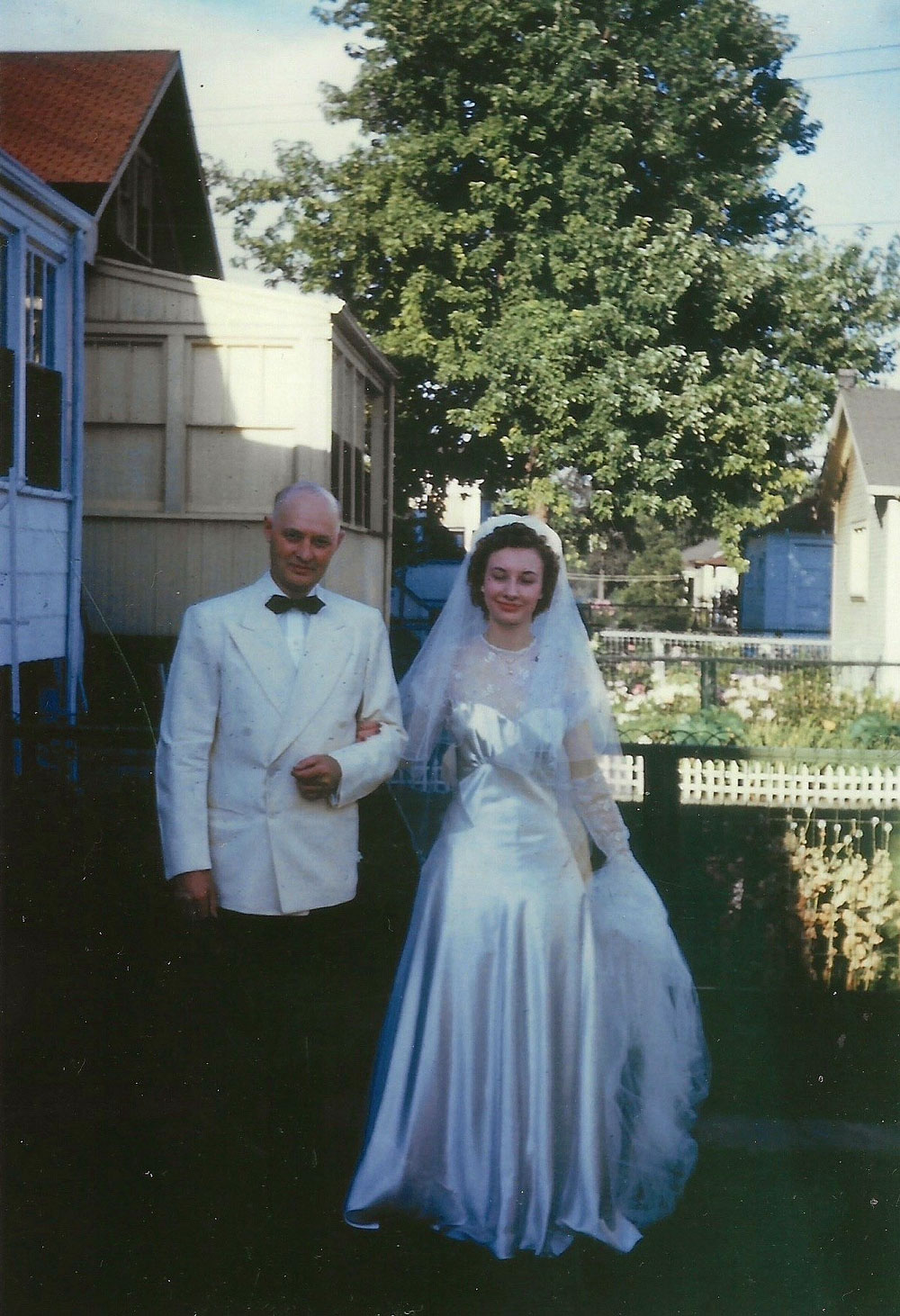
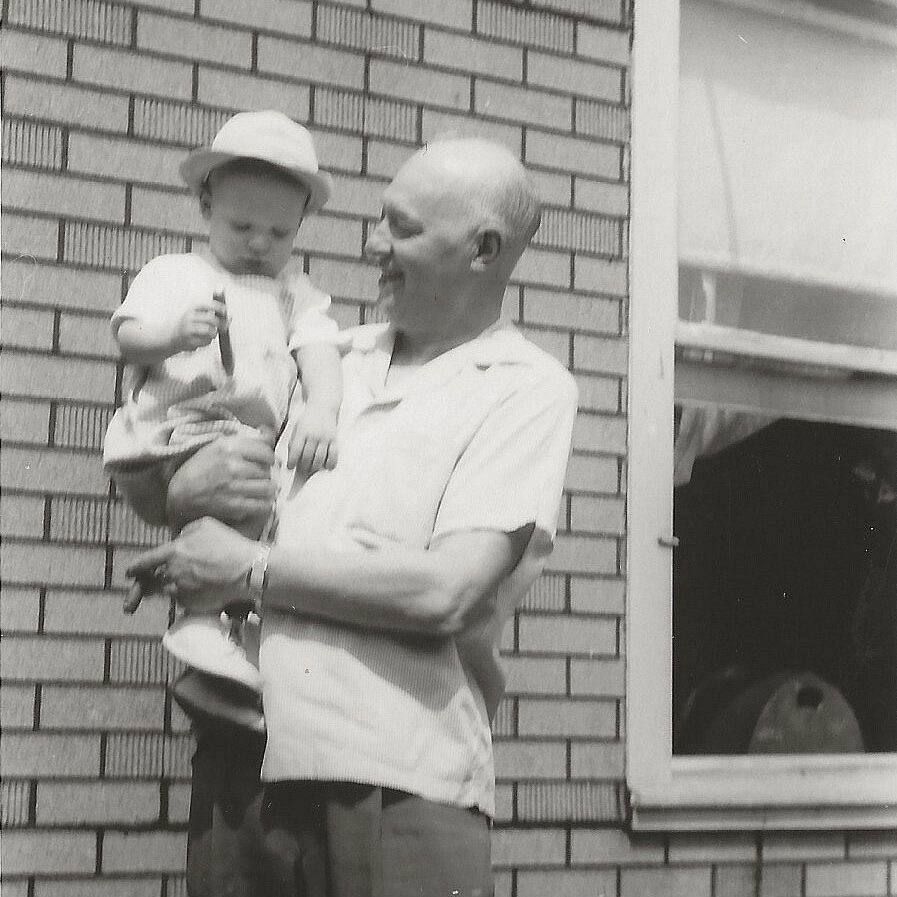
Oscar died on September 28, 1966, survived by his two daughters and six grandchildren. His journey reminds us that immigration is rarely a single act of courage. For Oscar, it meant leaving one country, embracing another, adapting to a changing profession, surviving economic hardship and rebuilding more than once.
The ocean crossing began his American story, but resilience defined it. His willingness to start over created opportunities not only for himself, but for the generations of his family who follow.

On June 19, 1967, Northwestern President J. Roscoe Miller sent Oscar’s wife a letter notifying her that a book within the Archibald Church Medical Library would be marked with a special bookplate bearing his name. Established in 1927, the library is now known as the Galter Health Sciences Library & Learning Center and houses the Archibald Church Historical Medical Collection, a rare medical book collection.
Inspired by this Story?
Discover more inspiring immigrant stories and learn how immigrants have shaped American history. Subscribe to the Immigrant Hall of Honor’s monthly e-newsletter.
Monthly stories and updates from the Immigrant Hall of Honor. Unsubscribe at any time.