
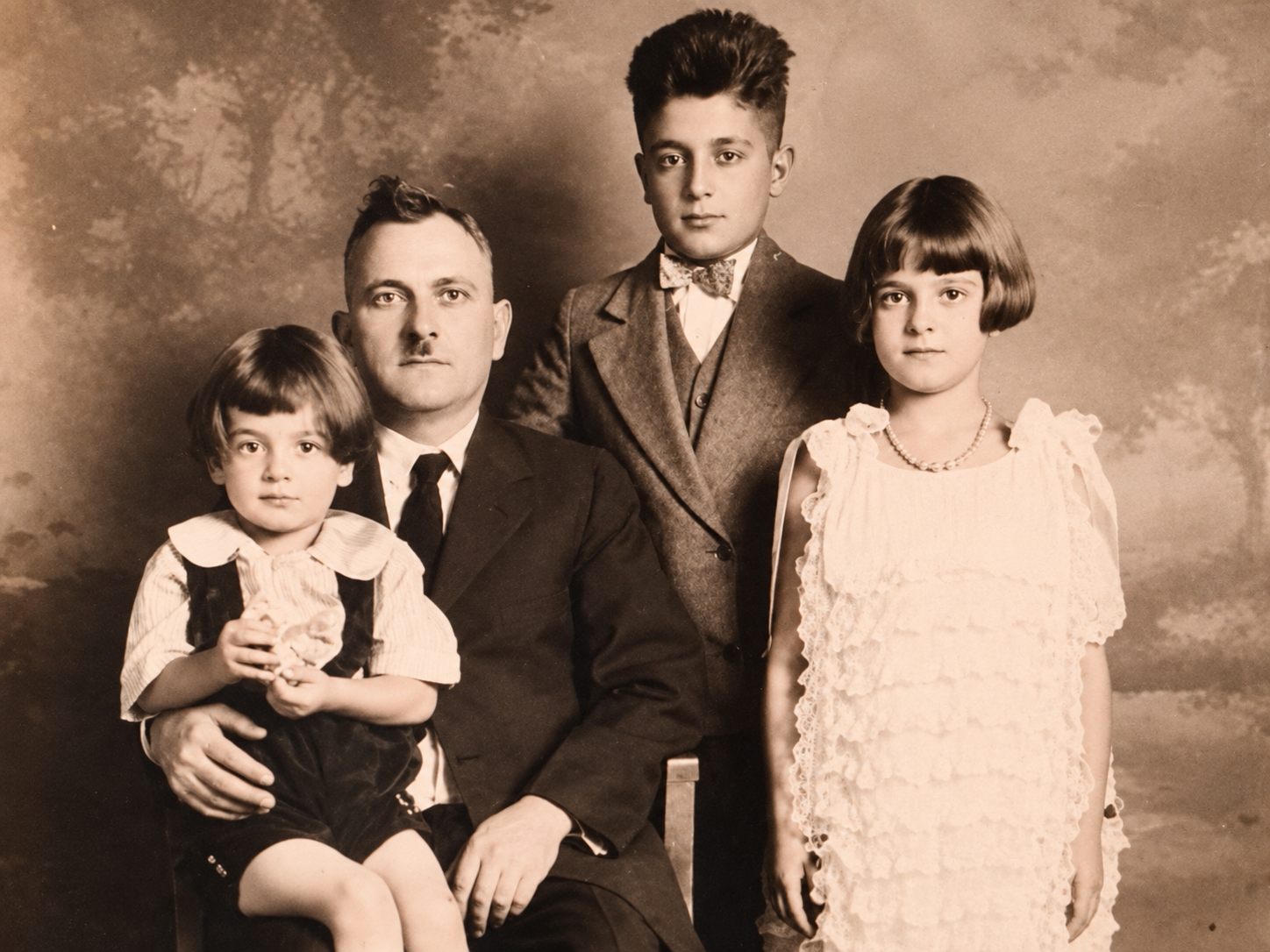
John K. Manos: From the Mountains of Sparta to the Industrial Midwest
FOUNDING VOICES
Anthony Manos and Margaret Manos
Story and family photographs contributed by Anthony Manos and Margaret Manos
Historical research, context and editorial development by the Immigrant Hall of Honor Editorial Team.
The Immigrant Hall of Honor gratefully acknowledges the Tsintzina Society, the oldest Greek heritage society in the United States, for its historical research and preservation of Tsintzinians’ history in America.
|
Born |
May 30, 1880, in the village of Tsintzina, Greece |
|---|---|
|
Arrived in the U.S. |
1898 |
|
Settled in |
Steubenville, Ohio |
|
Occupation(s) |
Confectioner, Merchant, Pool Hall Proprietor, Clerk |
|
Died |
May 9, 1962 |
John K. Manos came to America from Greece as a teenager, first making the journey around 1893 with his older brother, Nikolaos, according to family recollections. The brothers were living together in Pittsburgh, John scrubbing floors in a factory, when a splinter in his knee became infected, leading to the amputation of his leg.
Family members believe John returned to Tsintzina to recuperate before making his way back to America on his own in 1898, at age 18. Over the next several decades, he would try his hand at a succession of businesses, marry and raise a family, all while struggling to find lasting stability in America.
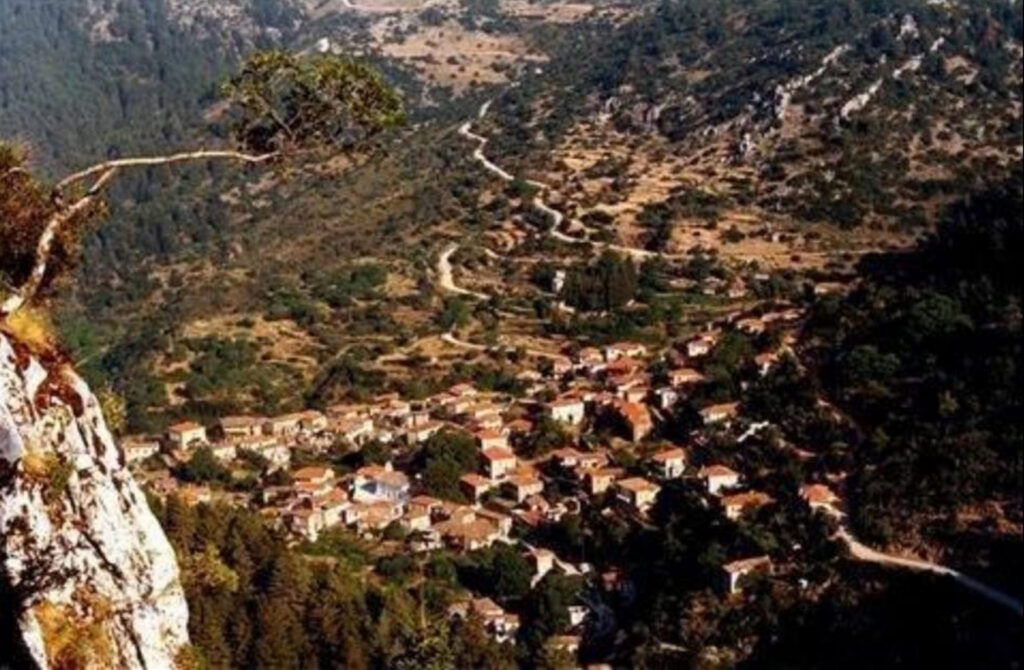
From Tsintzina to America
When Ioannis Kyriakos Vouloumanos, aka John K. Manos, left Greece for America, he followed a path hundreds of young men from the mountain villages around his home had already taken.
John’s home village of Tsintzina, known as Polydroso since the 1920s, sits high in the Parnon Mountains of the Peloponnese, northeast of Sparta. In the late nineteenth century, its young men began building connections that stretched from the Greek countryside to Chicago, New York, the industrial towns of Pennsylvania and Ohio, and eventually across the country. Many followed in the footsteps of one man, Christos Tsakonas.
Tsakonas had arrived in America in the 1870s and established himself in the fruit and confectionery trade. He then returned to Greece and recruited young men from Tsintzina and brought them back to America. The Tsintzina Society credits Tsakonas with helping bring nearly 1,000 young Spartans to Chicago between 1875 and 1891. From there, Tsintzinians and other Greek immigrants moved into Pennsylvania, Ohio, New York and elsewhere. In fact, John K.’s father, Kyriakos Nikolaos, was among those first early migrants, traveling to America with Tsakonas in 1882. By 1893, however, Kyriakos had returned to Greece.
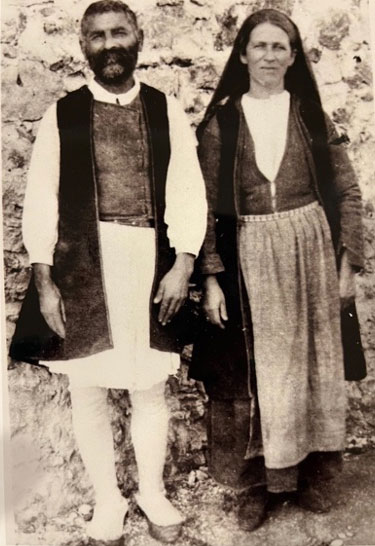
Historical accounts describe a business system in which Tsakonas established fruit and confectionery stores, employed young Greek immigrants from his home region, trained them in the trade, and then moved on to establish other businesses, leaving earlier stores in the hands of the men who had worked in them. In this way, immigration, employment, and business ownership became part of the same network.
John arrived in America more than a decade after that first large migration from Tsintzina, during a period of profound economic upheaval in Greece.The country’s economy was heavily dependent on currants—dried grapes cultivated extensively in the Peloponnese. When international demand and prices collapsed in the early 1890s, the effects rippled through the Greek economy, particularly in rural communities that depended on the crop.
The crisis helped fuel a major wave of Greek emigration. Between 1890 and 1914, nearly one-sixth of Greece’s population left the country, primarily for the United States and Egypt. John was part of a generation of young men leaving Greece during that period, and he came from a village where migration to America had already become an established path.
From New York to Steubenville
After arriving in America the second time, John joined his brother and cousins in Utica, New York, and eventually ran a fruit and confectionery store in nearby Little Falls. The choice of trade placed him in a line of work that had already become familiar to immigrants from his home region. The confectionery went bankrupt in 1907, and by 1909, John had moved west to Steubenville, Ohio. That year, the Steubenville City Directory listed him as proprietor of the Sugar Bowl Candy Co. at 335 Market Street.
Steubenville was an industrial Ohio River city whose economy included coal, iron, steel, glass, pottery, railroads and manufacturing. Immigrants from Greece, Italy, Poland, Serbia, Russia, Ireland and other countries were establishing communities throughout the Ohio Valley.
John’s business was part of the commercial economy that grew around the region’s industrial workforce.
On May 24, 1914, John entered an arranged marriage with another Greek immigrant, Irene Maglaras. She was 18 years his junior and had arrived in Steubenville with her two older sisters about one week before the wedding. According to family recollections, Irene and her sisters were all married to older Greek men that same month. Family lore also holds that Irene did not know John was an amputee until their wedding night, when she was shocked to discover that he had a wooden leg.
By 1915, The Sugar Bowl had closed, and John had left the confectionery business to operate the Columbia pool room in Steubenville. The timing coincided with several changes in John’s life, including his marriage, the birth of his first child and the economic uncertainty surrounding the 1913–14 recession and the outbreak of World War I, but there is no documented reason for the change.
The pool hall got John into some trouble with the law. In July 1919, he was indicted on three counts for operating a gambling game called “Standard Oil” at the Columbia pool room. John pleaded guilty, explaining that he had been tending the business while its owner, James Demetros, was in Greece. The court fined him $100 and costs on one count and ordered the gambling device confiscated and destroyed.
By 1920, census records show that John and Irene were living at 141 North Fifth Street with their children Milton, 4, and Sophia, 1. Their third child, Menelaus John Manos, was born in 1923.
John and Irene divorced in 1926. Irene left Ohio for Baltimore and later moved back to Greece with her second husband. The children remained in Steubenville, living in a series of foster homes while John lived in the back of the pool room.
Growing up in Steubenville, John and Irene’s children would have been part of a distinctly immigrant city. Among the children growing up in Steubenville around the same time was Dino Paul Crocetti, the son of Italian immigrants and a Steubenville native. According to family recollections, Dino was a childhood friend of John and Irene’s older children. Decades later, the boy they knew as Dino would become famous around the world as Dean Martin.
The Depression and later years
By 1930, census records show John as single, living at 412 Third Street, and still working as a pool hall proprietor.
It is not known exactly when John’s pool hall closed or what led to its closure, but by 1940, he was no longer a business proprietor. The 1940 census listed him as a sales clerk, and his World War II draft registration identifies his employer as the Dixie Cigar Store at Fourth and Adams in Steubenville. His youngest son, Menelaus John Manos, said that despite his years operating pool rooms and cigar stores, John K. always considered himself a confectioner.
John K. Manos remained in Steubenville for the rest of his life. He died on May 9, 1962, at the age of 81, leaving behind two sons, one daughter, 10 grandchildren, and two great-grandchildren.
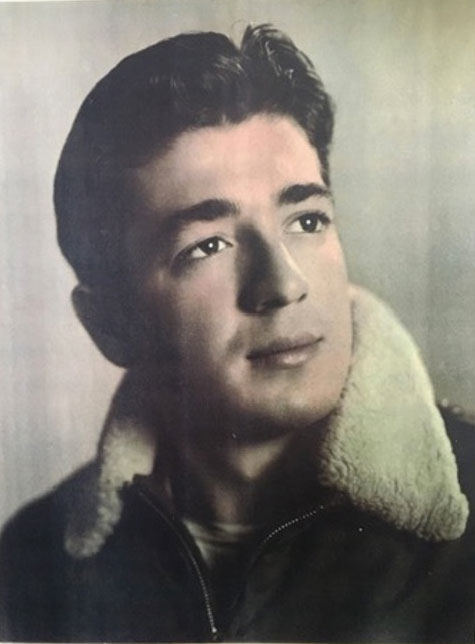
A MILITARY LEGACY
John K. Manos’s youngest son, Menelaus John Manos—who went by John—found a sense of family in the U.S. Army Air Forces.
During World War II, M. John trained as a waist gunner with a B-17 crew known as the Wright Crew, named for its pilot, 2nd Lt. Parke Wright III. The crew was stationed at a Royal Air Force base in Nuthampstead, England, in 1944.
On September 10, 1944, the Wright Crew flew its second combat mission, to Stuttgart, Germany. John and co-pilot 2nd Lt. Hamilton Mero did not fly with the crew that day. According to Missing Air Crew Report (MACR) 8918, the B-17-G, serial no. 42-107103, K8-A, “Maria Notre Dame,” was hit by flak and went down.
Five members of the crew were KIA: co-pilot Clinton B. Clifton, engineer Richard S. Trantham, radio operator Louis S. Fontana, ball turret gunner Lorin S. Liby, and tail gunner Thomas D. Wadleigh.
The four surviving members of the crew—pilot Parke Wright III, bombardier Harold L. Eck, navigator David E. Flipse, and waist gunner Walter F. Miller—were captured and became prisoners of war.
John went on to serve as a replacement crew member, flying 29 missions over Europe before the war ended. Years later, he would say that the Air Corps was the first stable home he had ever known.
Information compiled by The 398th BGMA Association Web Team, with thanks to Hamilton Mero.
Inspired by this Story?
Discover more inspiring immigrant stories and learn how immigrants have shaped American history. Subscribe to the Immigrant Hall of Honor’s monthly e-newsletter.
Monthly stories and updates from the Immigrant Hall of Honor. Unsubscribe at any time.