
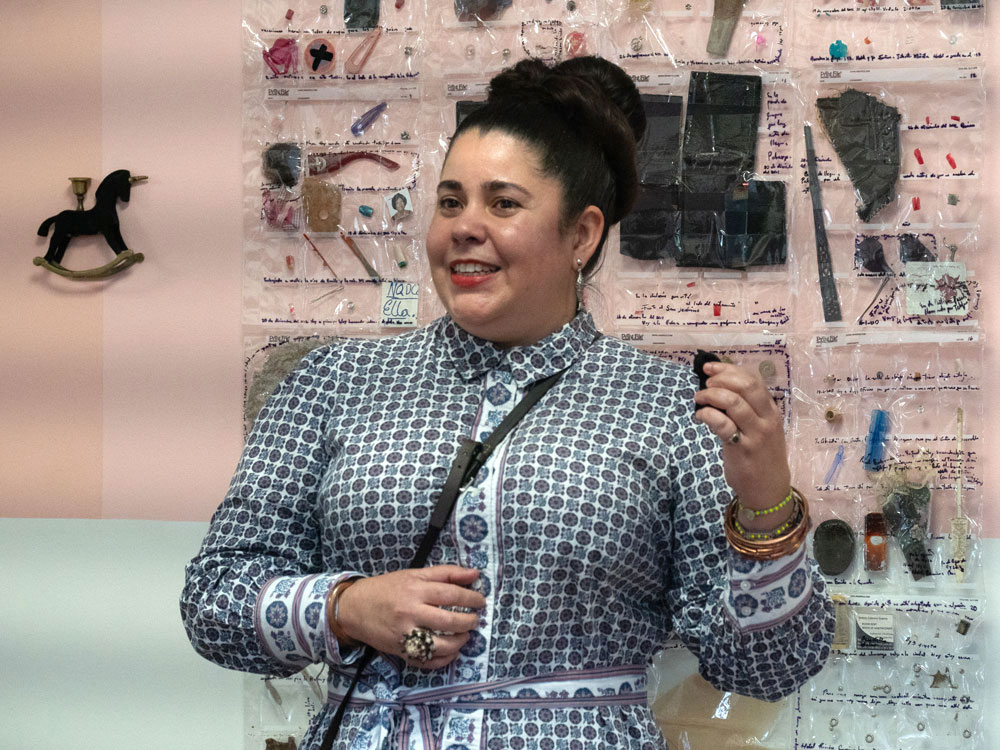
Tampa Artist Tatiana Mesa Paján Remembers Havana in Her Art
FOUNDING VOICES
Tatiana Mesa Paján
This story grew from conversations and collaborative writing between Tatiana Mesa Paján and an Immigrant Hall of Honor staff member.
|
From |
Havana, Cuba |
|---|---|
|
Arrived in the U.S. |
2013 |
|
Settled in |
Tampa, Florida |
|
Occupation(s) |
Artist, Professor |
How do you hold on to home when it’s time to leave?
For Cuban-born artist Tatiana Mesa Paján, it was through the careful collection of objects.
Collector of Gestures
Before leaving Cuba, Mesa Paján took a series of walks through the city, collecting discarded objects along the way.
“I created rules for myself,” says Paján, “using gestures to determine my itineraries and guide me toward the objects I was looking for.”
|
Gesture 16 |
Visiting places by knowing their shadow schedules |
|---|---|
|
Gesture 17 |
Visiting places by knowing their sun schedules |
|
Gesture 54 |
Recreating routes from my past—the paths I took as a child, from school to home, from the park to home, and other routes from different moments in my personal history—while collecting objects along the way |
|
Gesture 55 |
Recreating routes from the past of family members, such as my grandmother’s route from her home to the sewing workshop where she worked, or the route my father took as a child with my great-grandfather |
|
Gesture 56 |
Drifting through the city, walking in the same direction for an entire day |
|
Gesture 57 |
Returning to places where I said goodbye to someone, or where I saw someone for the last time, and waiting for people who resembled the man or woman I had said goodbye to |
Mesa Paján’s walks through Havana yielded an artist’s cabinet full of paint chips, pieces of metal, scraps of paper and other discarded objects gathered from the city streets.
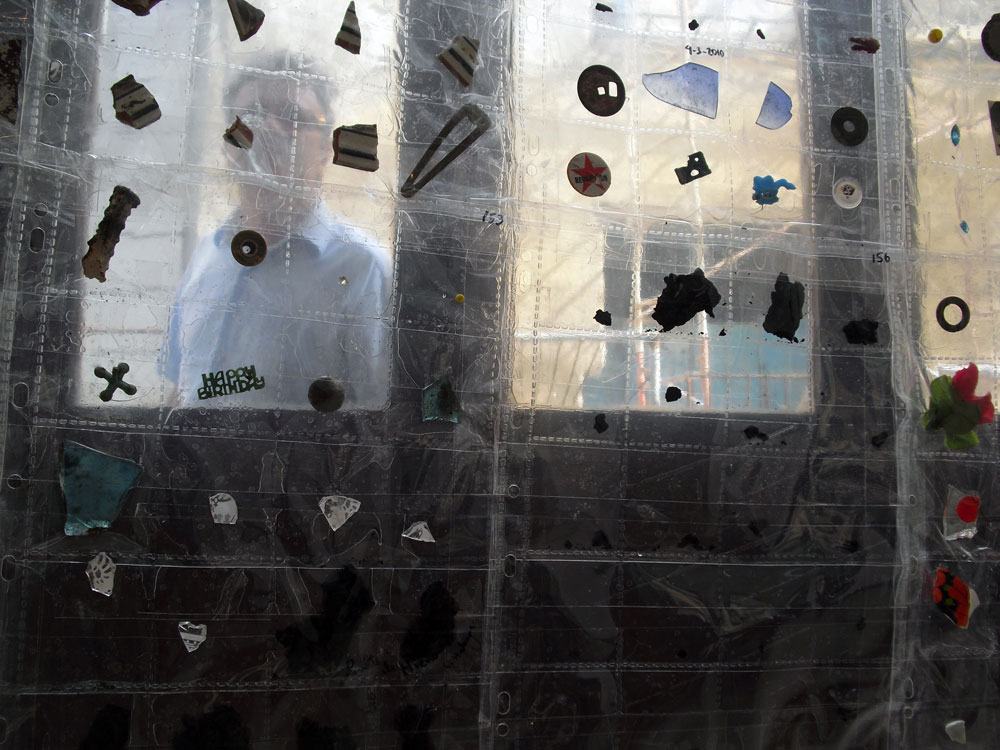
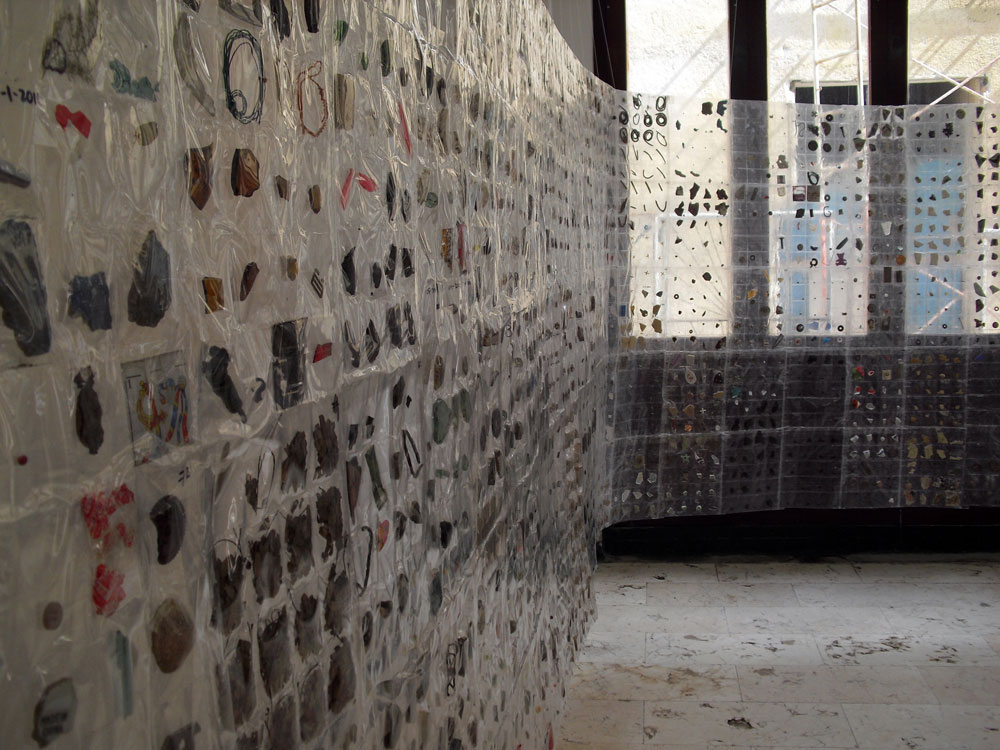
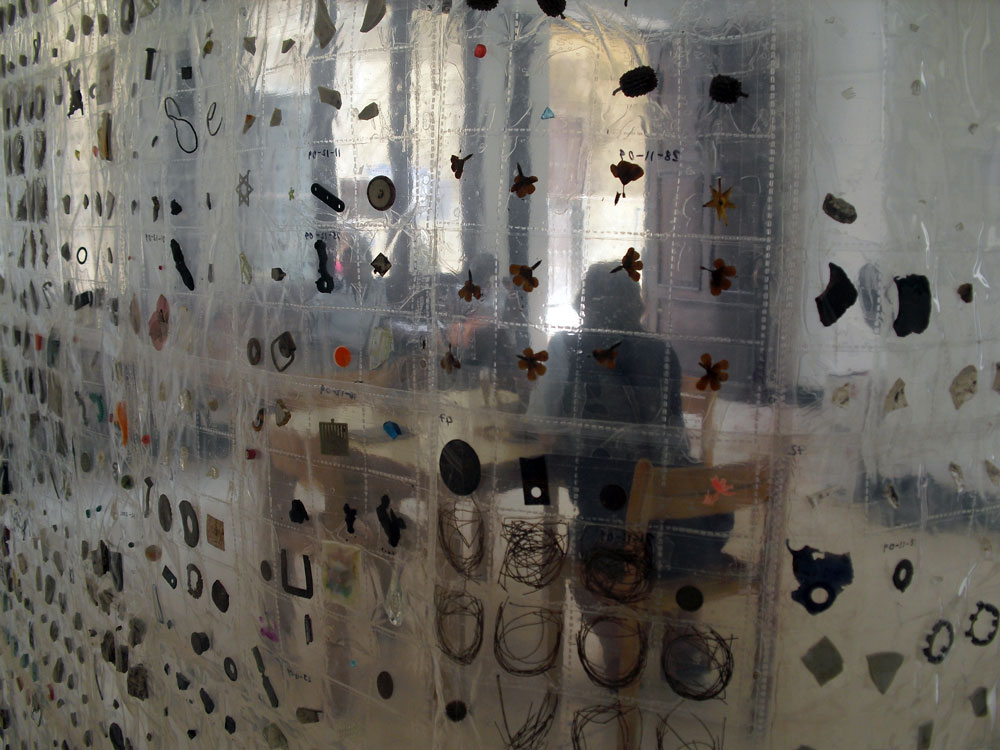
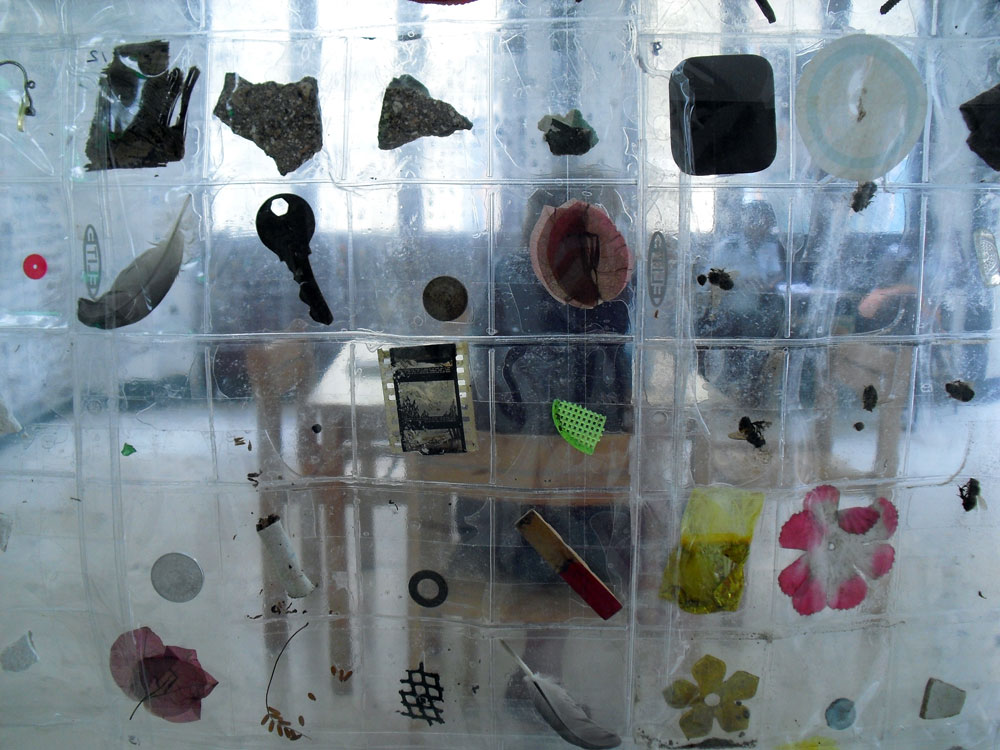
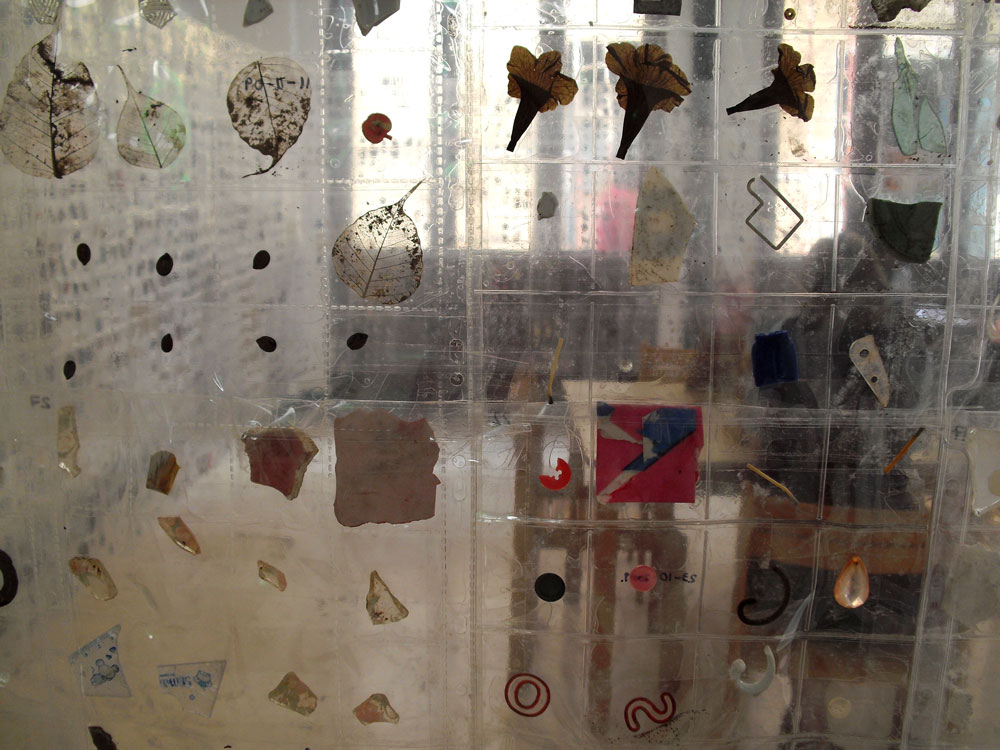

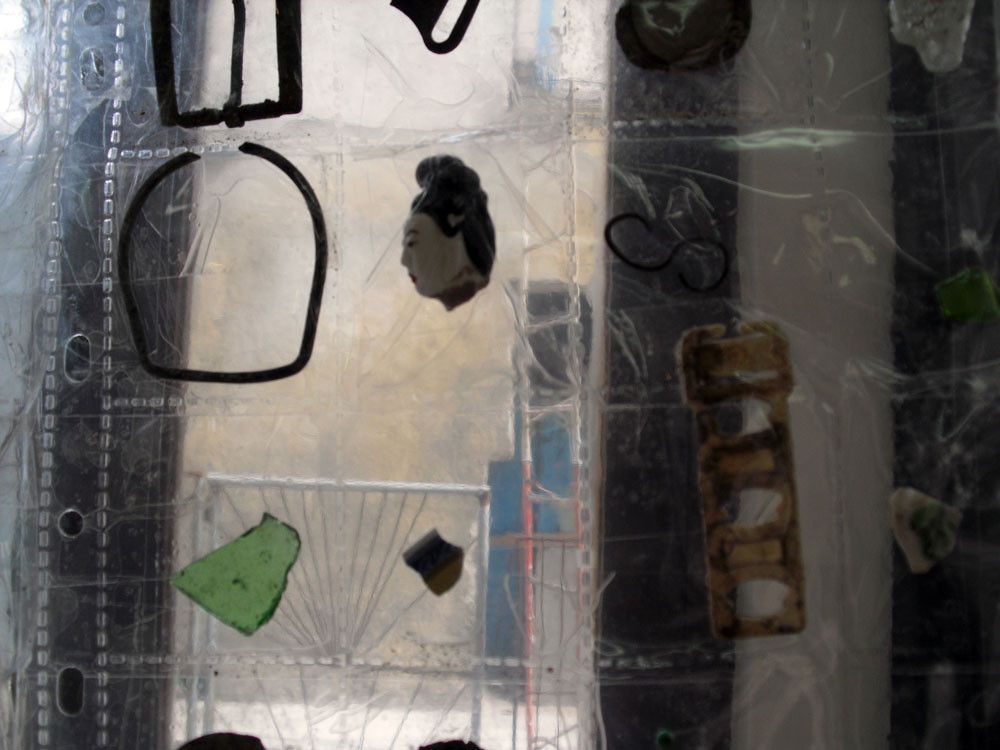
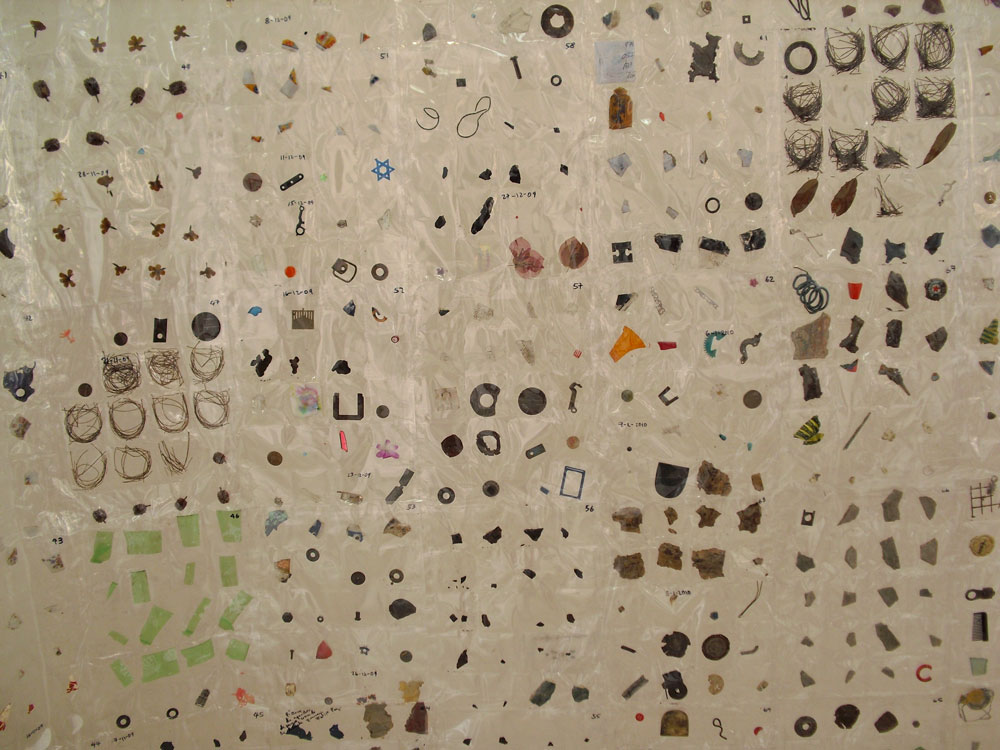
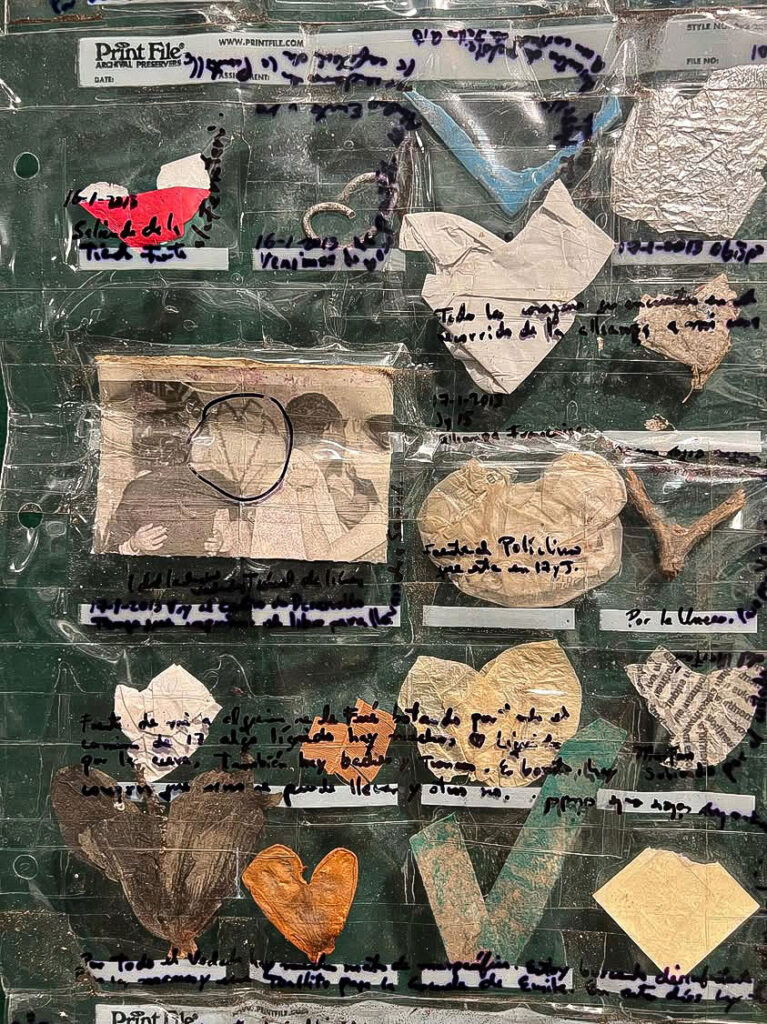
“It was like making an archaeology of the present—of my present, current experience, but also of the city and its people,” Paján explains.
While Mesa Paján began collecting as an art practice in 1999, the collections she began assembling in 2009—the year she realized she would eventually leave Cuba—carried the feeling of taking the skin of a city she knew she would never return to soon.
In 2013, after the Cuban government relaxed longstanding restrictions on leaving the island, Mesa Paján left Havana with her “goodbye collection,” and reunited with her sister in the United States. The change made it easier for many Cubans to leave, but it did not change the political reality of life on the island. Cuba remained a one-party authoritarian state, with restrictions on political dissent, freedom of expression and other civil liberties.
For Mesa Paján, the decision to leave was ultimately about freedom—and about the kind of life she wanted for her son.
Cuba is a dictatorship where human rights are systematically violated. I didn’t want to raise my son there. I know it sounds cliché, but I came here to find freedom. That’s the truth.
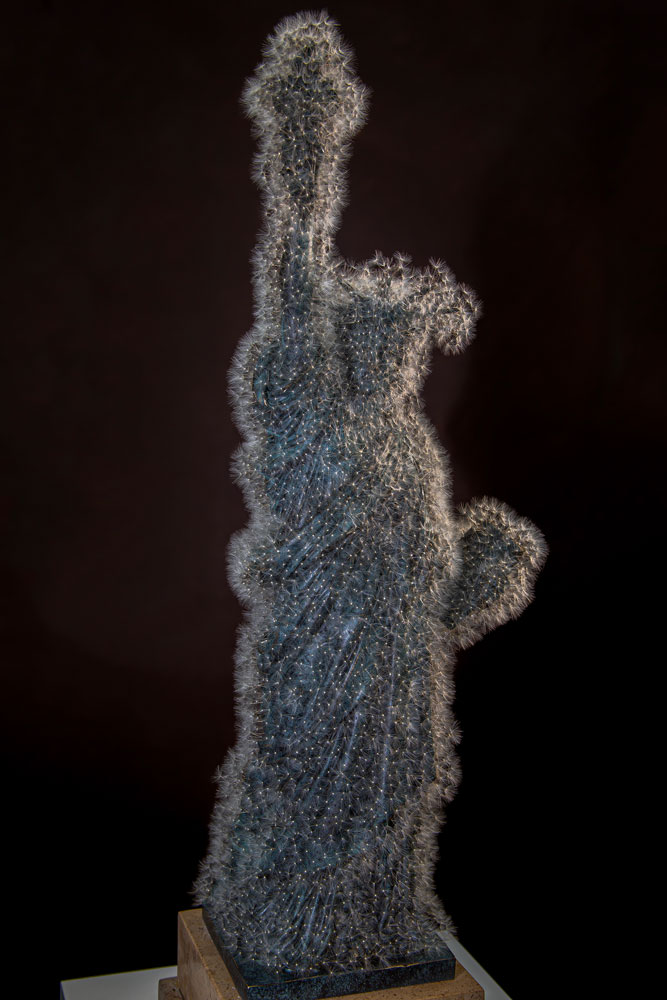
LIBERTAD, Dandelion Skin series, OXH Gallery Commission.
Gesture: A new skin. The first skin is my own hands, covering the object—like a snake shedding onto something that will continue to shed. Once the dandelion layer is complete, touch becomes impossible. The work reflects on fragile things, like freedom, that can never be touched again.
Cuba, it is never easy to talk about Cuba.
Tatiana Mesa Paján
“I was showing in Europe, talking to young and emerging collectors, winning prizes in Havana and all,” says Mesa Paján. “But that support system collapsed when I decided to come here in this way, with a one-way plane ticket.”
Mesa Paján went from being a full-time artist in Cuba to doing entry-level retail work in the United States.
“That was a wake-up call,” she told the Immigrant Hall of Honor.
After the events of 2021 and the Movimiento San Isidro, which particularly affected Havana’s art scene, Mesa Paján began to understand her earlier experiences differently. She came to see the Cuban art system as deeply intertwined with the government’s politics and narrative, and she began to question the role that system had played in her own career. Today, she has deliberately kept that world as far removed from her artistic career as possible.
Reinventing Herself
Eventually, Mesa Paján found work teaching art to at-risk youths, but she was still
struggling financially. A coworker encouraged her to pursue a master’s degree, and in
2019 she began an MFA at the University of South Florida. There, she reconnected with
the artistic part of herself she had set aside and turned her collected objects into art. But
collecting had already become more than a way of preserving Havana. It had become a
way of understanding the world around her.
Mesa Paján’s later collections ask a broader question: What are the things that hold us
together, no matter where we come from?
A kiss. A touch. The act of remembering. She sees them as a kind of shared human
language—something that can connect people even when their personal histories,
countries and circumstances are profoundly different.
“I’m a collector of things,” says Mesa Paján. “I collect the actions that make us human,
and I translate that into poetry.”
Inspired by this Story?
Discover more inspiring immigrant stories and learn how immigrants have shaped American history. Subscribe to the Immigrant Hall of Honor’s monthly e-newsletter.
Monthly stories and updates from the Immigrant Hall of Honor. Unsubscribe at any time.